
Choosing Your Tire Type
Select a category below to see how different compounds and tread patterns match your specific ride:
-

Street Tires
For daily use on paved roads. Typically made with a harder rubber compound to provide longer tread life. Smooth tread pattern that is optimized for traction on dry pavement.
-

Sport Tires
For high-performance riding. Made with a softer rubber compound to provide better grip and handling at high speeds.
-

Touring Tires
For long-distance riding. Made with a harder rubber compound to provide longer tread life. More rounded tread pattern that is optimized for stability and comfort during extended rides.
-

Off-Road Tires
For use on dirt, gravel, and other unpaved surfaces. Deep, aggressive tread pattern that is optimized for traction in loose or muddy conditions.
-

Dual Sport Tires
For use on both paved and unpaved surfaces. More intermediate tread pattern that is optimized for good traction on both types of road surfaces.
-

Scooter Tires
For use with scooters and other small displacement motorcycles. Smooth tread pattern that is optimized for stability and fuel economy.
How to Read Tire Markings
- Section Width: Indicated in millimeters (e.g., 170).
- Aspect Ratio: The height of the tire as a percentage of its width (e.g., 80).
- Tire Construction: B = Bias Belted, R = Radial, No Letter = Bias.
- Nominal Rim Diameter: The wheel size in inches (e.g., 15).
- M/C Designation: Short for "Motorcycle," used to distinguish from other vehicle tires.
- Speed Symbol: A letter code indicating the tire's maximum certified speed.
- Tire Type: Identifies if the tire is Tubeless (TL) or Tubetype (TT).
- Load Index: A numerical code representing the tire's maximum weight capacity.
- Country of Manufacture: Indicates where the tire was produced (e.g., Made in Brazil).
- DOT Serial Code: Safety identification and manufacturing date.
- Direction of Rotation: An arrow indicating the proper mounting direction.
- Max Load & Pressure: The specific weight and PSI limits when the tire is cold.
- Tread Wear Indicators (TWI): Markers in the grooves that show when the tire needs replacement.
Motorcycle Tire Sizing
How do you find your bike's tire size? Get on the ground and look. If your bike is running aftermarket wheels, the actual tire size might be different from what is listed in your owner's manual or on the spec sticker.
If you know your bike is 100% stock, you can check your owner's manual or an online data spec sheet.
- Metric (The modern standard)
- Alpha-Numeric (Common for cruisers)
- Inch / Standard (Vintage and off-road)
Metric Sizing
(most common)- 160: The width of the tire in millimeters.
- 70: The aspect ratio (sidewall height). The height is 70% of the width (112mm).
- R or B: Indicates construction. R is Radial, B is Bias Ply. If missing, it's Bias Ply.
- 17: The rim diameter in inches.
Alpha Numeric Sizing
(mostly cruisers)- MU = 140 Millimeters (Width): Refereance the street tire conversion chart
- 85 = Aspect Ratio
- B = Bias Ply Construction (Radial if R)
- 16 = Rim Diameter (Inches)


Standard Inch Sizing
(mostly dirt bikes)- 5.00: The tire width in inches (equivalent to 127mm).
- 16: The rim diameter in inches.
- Standard inch sizes typically range from 2.75 (80mm / MH) up to 6.00 (150mm / MV). Refer to the conversion chart below for a full list of sizes.
Tire Conversion Charts
Use the charts below to convert between Metric, Alpha, and Inch sizing for street and off-road applications.
Street Tire Conversions
Front Tires
| Metric | Alpha | Inch |
|---|---|---|
| 80/90 | MH90 | 2.50/2.75 |
| 90/90 | MJ90 | 2.75/3.00 |
| 100/90 | MM90 | 3.25/3.50 |
| 110/90 | MN90 | 3.75/4.00 |
| 120/80 | — | 4.25/4.50 |
| 120/90 | MR90 | 4.25/4.50 |
| 130/90 | MT90 | 5.00/5.10 |
Rear Tires
| Metric | Alpha | Inch |
|---|---|---|
| 110/90 | MP85 | 4.50/4.75 |
| 120/90 | MR90 | 4.50/4.75 |
| 130/80 | — | 5.00/5.10 |
| 130/90 | MT90 | 5.00/5.10 |
| 140/80 | — | 5.50/6.00 |
| 140/90 | MU90 | 5.50/6.00 |
| 150/80 | MV85 | 6.00/6.25 |
| 150/90 | MV85 | 6.00/6.25 |
Off-Road Tire Conversions
Front Tires
| Metric | Metric (Alt) | Inch |
|---|---|---|
| 60/100 | 90/80 | 2.50/2.75 |
| 70/100 | 90/80 | 2.75/3.00 |
| 80/100 | 100/80 | 3.00/3.25 |
Rear Tires
| Metric | Metric (Alt) | Inch |
|---|---|---|
| 80/100 | 80/90 | 2.50/3.60 |
| 90/100 | 110/90 | 3.60/4.10 |
| 100/100 | 130/80 | 4.00/4.50 |
| 120/100 | 140/80 | 5.00/5.10 |
Radial vs Bias Ply
Bias Ply Tires
Best suited for heavy-duty loads, which is why they are standard on most heavy cruiser and touring applications.
- Construction: Layers of Nylon, Rayon, or Polyester cords laid bead-to-bead.
- Benefit: Extremely stiff sidewalls that bear significant weight.
- Trade-off: They tend to run hotter and are less nimble than radials.
Radial Tires
Designed for high-performance and heat dissipation, typical of modern sport and adventure bikes.
- Construction: Steel belts run radially across the tire, stacked only in the tread area.
- Benefit: Thinner, flexible sidewalls provide better rider feedback and stay cooler.
- Trade-off: Lower load-bearing capacity than bias-ply equivalents.
Load Index
The next series of numbers and letters (77H) will be the speed rating and load index of the tire. This code is presented the same for either Metric or Alpha/Numeric tires. Just because the "tire size" is the same size that your wheel or rim will "accept" does not mean that that tire is a good fit for your motorcycle or your riding style.
- The numbers (77) represent the load-carrying capacity of the tire. In this case, 77 means 908 pounds. A typical load rating chart shows 47 or 386 lbs all the way up to 87 or 1,202 lbs.
- The letters (H) represent the speed rating of the tire. In this case, H means a top speed of 130 miles per hour. A typical speed chart will show J or 62mph all the way to W, which is 168mph.
- Sometimes we will see a ZR in the tire size and then a different Load Rating / Speed Index label to follow. This Z indicates a maximum sustained speed capability in excess of 149 mph and the 91W indicates a 168mph Maximum Top Speed.
| Load Index | Max Weight (LBS) |
|---|---|
| 47 | 386 |
| 48 | 397 |
| 49 | 408 |
| 50 | 414 |
| 51 | 430 |
| 52 | 441 |
| 53 | 454 |
| 54 | 467 |
| 55 | 481 |
| 56 | 494 |
| 57 | 507 |
| 58 | 520 |
| 59 | 536 |
| 60 | 551 |
| 61 | 567 |
| 62 | 584 |
| 63 | 600 |
| 64 | 617 |
| 65 | 639 |
| 66 | 661 |
| 67 | 677 |
| 68 | 694 |
| 69 | 716 |
| 70 | 739 |
| 71 | 761 |
| 72 | 783 |
| 73 | 805 |
| 74 | 827 |
| 75 | 853 |
| 76 | 882 |
| 77 | 908 |
| 78 | 937 |
| 79 | 963 |
| 80 | 992 |
| 81 | 1,019 |
| 82 | 1,047 |
| 83 | 1,074 |
| 84 | 1,102 |
| 85 | 1,135 |
| 86 | 1,168 |
| 87 | 1,202 |
Tire Speed Ratings
The next series of numbers and letters (77H) will be the speed rating and load index of the tire. This code is presented the same for either Metric or Alpha/Numeric tires. Just because the "tire size" is the same size that your wheel or rim will "accept" does not mean that that tire is a good fit for your motorcycle or your riding style.
It is very important that you choose a tire for your vehicle that meets or exceeds your vehicle's load or your riding style. Just because a tire is the right size and is cheap does not mean that it will be able to "carry the load" you will throw at it or be able to "sustain the speeds you travel."
Load rating and speed ratings are often overlooked when consumers are choosing tires. Running a tire that does not meet your vehicle needs or your riding style can lead to premature tire wear or even tire failure. Bottom line: it is dangerous! Don't do it.
| Rating Symbol | Max Speed (MPH) |
|---|---|
| J | 62 mph |
| K | 68 mph |
| L | 75 mph |
| M | 81 mph |
| N | 87 mph |
| P | 93 mph |
| Q | 99 mph |
| R | 106 mph |
| S | 112 mph |
| T | 118 mph |
| U | 124 mph |
| H | 130 mph |
| V | 149 mph |
| W | 168 mph |
| Y | 186 mph |
| Z/ZR | 149+ mph |
Can You Install Wider Tires?
The next series of numbers and letters (77H) will be the speed rating and load index of the tire. This code is presented the same for either Metric or Alpha/Numeric tires. Just because the "tire size" is the same size that your wheel or rim will "accept" does not mean that that tire is a good fit for your motorcycle or your riding style.
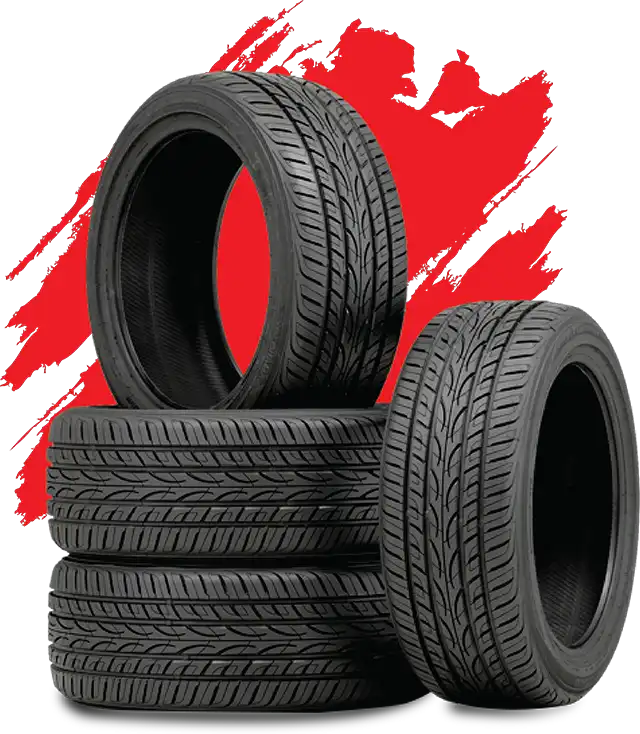
Wide Tires on Narrow Rims
Squeezing a 150mm (6 inch) tire onto a rim that was meant to accept a 130mm (5 inch) tire will pinch the sidewall out cause an extreme arc in the side tread of the tire. This tire will now "fall very fast" into corners and will have much less of a contact patch, or rubber on the road in the corner. Not good!
Narrow Tires on Wide Rims
Putting a 150mm (6 inch) tire onto a rim designed for a 170mm (7 inch) tire completely flattens the tire's profile. This exposes the rim to damage and this tire will now take an extreme amount of pressure or force to lean into a corner and will be very slow to come out of the corner. In essence, it will turn like a truck instead of like a nimble motorcycle.
Tube vs. Tubeless

If your bike has spokes, you will most likely will need a tube.
If your bike has cast wheels, mag wheels, forged wheels or billet aluminum wheels, you will most be running tubeless tires. The inside of these wheels is smooth and there is no place for the air to escape, unlike spoke wheels.
Most spoke rims have spokes which protrude into the center of the inside of the rim, where the air sits, and these joints leak air. Because of this, you must run a tube to keep the air from escaping and avoid a sudden flat.
Tube & Tubeless FAQ
Can I run tubeless tires on a tube-type rim?
Yes, any tubeless tire can be run on a tube-type rim, as long as you fit a tube into the tire when mounting up the tire.
Do I need to replace my tube at every tire change?
Yes and No.
Yes: On a street bike, which can see upwards of 20k miles between tire changes, we recommend a tube change at every tire change! Who wants to "blow a tube" just a couple thousand miles into that new tire? Nobody! Better to be safe than sorry.
No, not really: On a dirt bike, when you are putting only hours on a set of tires and the tire / tube do not get put to the same stresses of super-high heat for hours, days or even months on end. If your tube looks good, run it again. We typically change our tubes every three tire changes or so. There is no science here, just a gut feeling.
What is the difference between a regular tube, a heavy-duty tube, and an ultra/uber-heavy duty tube?
- Standard tubes: Typically just over 1.2mm in thickness.
- Heavy Duty Tubes: Begin at 2.8mm and go up to 3.5mm depending on the manufacturer.
- Ultra Duty or Uber Duty tubes: Typically 4mm or more in thickness, depending on the manufacturer.
What size tubes do I need for my tires?
Check a size chart. Most tubes are sized in the standard inch method. Example: a 3.25-19 tube will fit a 90/90-19 front tire or a MH-19 front wheel tire.
Are the same sized (and thickness) tubes created equal?
No. Now that we know what size tube we need, we need to look at what valve stems we need. Be careful. Sometimes the front and rear wheels will require a different style of valve stem. Here are the questions that need to be answered when looking at valve stems:
- Is the valve stem center-mounted or side-mounted?
- Is the valve stem rubber or metal?
- Is the valve stem straight, or does it have a 90-degree bend?
- Is the valve stem base threaded or non-threaded?
- CMV
- Center Metal Valve - Threaded base with nuts
- SMV
- Side Metal Valve - Threaded base with nuts
- TR-4
- CMV (most common dirt bike)
- JS-87
- Center Metal 90-degree bend
Do I need a rim strip?
Yes. Rim strips are essential. They protect your tube from being rubbed or punctured by the spoke nipples where they enter the rim.
Tire Balance Dots
Balance dots appear on most street-oriented tires. They are placed by the manufacturer to indicate the lightest part of the tire. As a rule of thumb, when mounting the tire, it is best to line this dot up with the valve stem. This typically requires less weight to be added to get the tire/wheel combo balanced. All street or track-bound tires should be balanced to ensure the best stability at speed, promote even tire wear, and maximize mileage.
Managing Tire Pressure
Running proper tire pressure is the single most important thing to monitor once your tire is installed.
Most "Recommended Tire Pressures" are clearly stated on the sidewall of all tires, often listed as "Max Load XXX lbs at XX PSI Cold" or "Maintain XX PSI."
Depending on the load you carry or your riding style, tire pressures can be adjusted to meet your needs, but they should never be set higher than the manufacturer's maximum recommended pressure.
Choosing the Right Tires
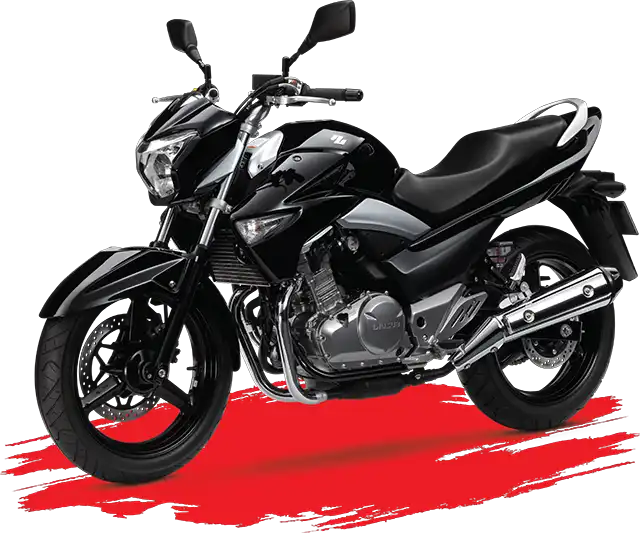
Motorcycle tires are one of the most critical safety items on any bike, second only to brakes. Choosing the proper tire ensures the best ride possible: softer compounds provide better grip, harder compounds offer higher mileage, and knobby treads are essential for off-road traction.
Shop Tires By Brand





Get Your Motorcycle Tires Today
Chaparral Motorsports carries the proper tires for any motorcycle on the road today. Shop motorcycle tires online, call our experts at 1-800-841-2960, or visit our 160,000-square-foot retail showroom and dealership in Southern California.
