
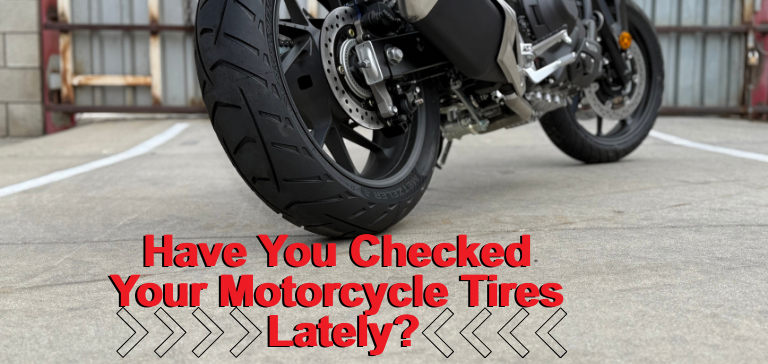
Why Check Your Tires?
A quick tire inspection can make the difference between a smooth ride and a dangerous situation. Here’s what to look for and why it matters.
Motorcycle tires endure constant stress—heat cycles, road debris, changing weather conditions, and varying loads. Over time, even the best tires wear down or degrade. Regular checks not only keep you safe but also help you get the most out of your tires.
- Reduced Traction: Leads to longer, more dangerous stopping distances.
- Poor Handling: Causes instability and "wobble" in corners.
- Blowout Risk: Greatly increases the chance of sudden, catastrophic failure.
- Uneven Wear: Drastically shortens your tire's lifespan and costs you more over time.
How to Inspect Your Tires
Use this 8-point checklist to identify any issues before they become safety hazards. Each inspection takes just a few minutes.
1. Tread Depth
Tread depth is essential for maintaining grip—especially in wet conditions. U.S. federal regulations set the minimum legal tread depth for motorcycles at 1/32" (0.8 mm), but some states — including New York and Texas — require 2/32" (1.6 mm). Check your state's requirement, and note that most tire manufacturers and safety experts recommend replacing motorcycle tires at 2/32" or sooner for safer wet-weather performance, regardless of the federal minimum.
A simple way to check: Place an upside-down penny into the tread groove. If the tread reaches above the top of Lincoln's hair head, you still have usable tread. If not, it's time to start shopping for replacements.
2. Tire Wear Indicators
Most motorcycle tires come with built-in wear indicators—also known as wear bars. These are small raised sections molded into the grooves of the tire.
Look for markings like TWI, TW, or arrows on the sidewall to locate them. If the tread is worn down flush with these indicators, your tire has reached its limit and should be replaced immediately.
3. Cracking and Dry Rot
Rubber naturally breaks down over time, especially when exposed to sunlight, heat, and ozone.
Signs to watch for: Small cracks along the sidewall or tread, and faded or brittle-looking rubber. Cracking or dry rot indicates the tire has aged and lost flexibility—reducing grip and increasing the risk of failure.
4. Nails, Screws, and Road Debris

Stop & Go Tubeless Plugger
- Do not ignore it, and do not continue riding at speed. Move to a safe location before inspecting.
- Treat any roadside repair as an emergency, temporary fix only. A plug kit or sealant is meant to help you reach a tire shop — not to restore the tire to full service.
- Never attempt to repair a sidewall or shoulder puncture.If damage is outside the main tread area, the tire must be replaced.
- Ride slowly and directly to a qualified tire shop or motorcycle dealer for professional inspection. A proper repair requires dismounting the tire to check for hidden internal damage.
- When in doubt, replace the tire. Tire manufacturers have differing guidance on whether repaired motorcycle tires should be returned to service. Consult your tire manufacturer or a qualified technician before relying on any repair.
5. Exposed Cords or Steel Belts
If you can see cords or metal strands showing through the rubber, your tire is beyond worn out—it’s dangerous. At this point, the tire has lost structural integrity.
6. Uneven Wear
Run your hand along the tread surface. Does it feel smooth and consistent, or wavy and uneven?
- Improper tire pressure
- Suspension issues
- Poor wheel balance
- Worn or improperly adjusted steering head bearings
- Vibration
- Reduced traction
- Unpredictable handling
7. Squared-Off Tires
If you do a lot of highway riding, your rear tire may wear flat across the center, creating a “squared” profile. A rounded tire profile is essential for smooth, predictable handling.
- Sluggish turn-in.
- Unstable cornering.
- Reduced rider confidence.
8. Tire Pressure
Tire pressure might be the easiest thing to check—but it’s also one of the most important.
Always check your tire pressure with a gauge (a quality gauge such as the Moose Tire Inflator Gauge works well) when the tires are cold and follow your motorcycle manufacturer’s recommended PSI listed in your owner's manual or on the chain-guard or swingarm placard..

Moose Tire Inflator Gauge
- Poor handling and reduced grip.
- Accelerated or uneven wear shortens tire lifespan.
- Harsh ride quality affects comfort and control.
- Increased blowout risk when carrying passengers or gear.
When it's time to replace
Match the size, load index, and speed rating specified in your motorcycle's owner's manual. Installing a tire with a lower speed rating, lower load index, or incompatible construction (bias vs. radial) can affect handling and stability. Front and rear tires should generally be from the same manufacturer and model family — mixing brands or tread patterns can result in unpredictable handling. Motorcycle tires should be mounted, balanced, and bead-seated on proper equipment; we recommend professional installation by a qualified technician.
A quick visual inspection before every ride—and a more thorough check regularly—can go a long way in keeping you safe. It only takes a few minutes but can prevent costly repairs or dangerous situations down the road.
Ride Safe, Ride Ready
If your tires aren’t road-ready, don’t take chances. Chaparral Motorsports offers a huge selection of motorcycle tires from top brands to suit every riding style—from sport and cruiser to ADV and off-road.
Not sure what condition your tires are in? Bring your bike into the Chaparral Motorsports service department and let the pros give it a full inspection. It’s a simple step that ensures every ride starts—and ends—safely.
Safety Notice & Disclaimer
This article is provided for general informational purposes only and does not constitute professional, mechanical, or legal advice. Motorcycle tire condition, repair, and replacement decisions should always be made in consultation with your owner's manual, the tire manufacturer's guidance, and a qualified motorcycle technician.
No riding gear can guarantee protection in every crash or impact. The performance of any helmet, armor, or apparel depends on proper fit, correct use, the nature of the incident, and the gear's condition at the time. Helmets and impact armor that have been involved in a crash, dropped, or otherwise compromised should be replaced — even if no damage is visible.
Roadside tire repairs — including plugs and sealants — are emergency measures only and do not restore a tire to its original condition or speed rating. Never ride on a tire with sidewall damage, exposed cords, visible belts, or cracking. Minimum tread depth requirements vary by state, and tire manufacturers publish their own guidance on repair, replacement, and maintenance.
Chaparral Motorsports is not responsible for injury, damage, or loss resulting from tire maintenance, repair, or replacement decisions made based on information in this article. When in doubt, replace the tire and consult a qualified professional.
