
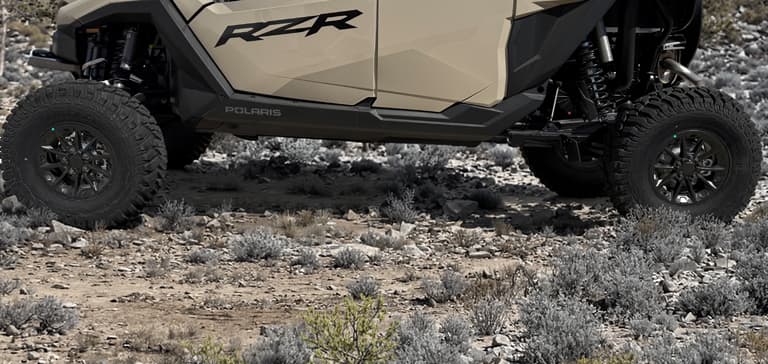
At Chaparral Motorsports, riders often ask why their new tires don’t measure exactly as advertised. The truth is that how you measure the tire makes a big difference. Below we break down the several ways to measure UTV tire height and explain why measurements can vary.
Why Labeled Tire Sizes Lie
Manufacturers design tires differently, and several factors can influence the final height once the tire is mounted and installed. Because of these variables, the true installed height of a tire can sometimes be different than the sidewall sizing.
- Wheel width: Many UTV tires are designed around a 7-inch wide wheel, which is the common rim width for side-by-sides.
- Air pressure: Lower PSI will cause the tire to squat and measure shorter.
- Vehicle weight: Tires compress slightly when mounted on a machine.
- Tread design and manufacturer differences: Through varying manufacturing processes, different brands can vary even with the same labeled size.
Measuring Installed Tires
A quick, easy, and highly common method is to measure the tire while mounted on the vehicle under load, which reflects how tall the tire actually sits during real riding conditions. This measurement represents the true installed tire height.
- Mount the tire on the recommended wheel width: Wheel width affects tire shape and height. Using the manufacturer’s recommended wheel ensures the tire measures correctly.
- Inflate the tire to the recommended PSI: Always use the air pressure listed by the vehicle manufacturer, not your preferred trail pressure. f you are running an aftermarket tire that differs from the OEM size, check the tire's sidewall for its own recommended pressure range — the OEM placard PSI may not be appropriate for a non-stock tire.
- Install the tire on the vehicle: Mount the wheel and tire onto the machine. Torque lug nuts to the value specified in your owner's manual, in the proper star/cross pattern.
- Park the vehicle on a flat surface: A level garage floor or smooth concrete works best for accurate measurements.
- Measure from the ground to the top of the tire: Place a tape measure on the ground and measure straight up through the center of the tire to the top of the tread. This measurement represents the true installed tire height.
Measuring Uninstalled Tires
If the tire isn’t mounted on a vehicle yet, there are two additional methods you can use for comparison.
Mounted Height Measurement
This method gives a close approximation to the height printed on the sidewall, but it will usually measure slightly taller than when the tire is installed on a vehicle.
- Mount the tire on a wheel.
- Inflate it to the proper PSI.
- Stand the tire upright.
- Measure from the floor to the top of the tread.
- Roll the tire slightly and measure again to confirm consistency.
Circumference Calculation
This calculation provides a mathematical diameter estimate, though it may still vary slightly from the real installed height.
- Mount and inflate the tire to the proper pressure.
- Wrap a tape measure around the center of the tread to find the circumference.
- Divide that number by Pi (3.14). The formula looks like this: Tire Diameter = Circumference ÷ 3.14
Why Accurate Tire Height Matters
Knowing the true height of your UTV tires helps with
- Clearance and fitment
- Gear ratio changes
- Speedometer accuracy
- Suspension performance
- Maintaining the lateral and pitch stability your vehicle was certified for
- Avoiding interference with A-arms, CV boots, fenders, and bodywork at full steering lock or full suspension compression
- Preserving CVT belt and drivetrain life (taller tires effectively raise final drive gearing and increase load)
Tire Height Reference Table
We wanted to show the difference in tire heights based on the manner in which measurements can be taken. We used three different tires of varying sizes, from three different overseas manufacturers. We measured both the diameter and circumference of each tire. Each tire was measured by itself, mounted onto a 15x7 wheel and inflated to 18 psi, and then under load of the rear right side of a 4 seat Polaris RZR.
| Ohanzee | XC729 R | Stock Pro Armor Trekker 2.0 | |
|---|---|---|---|
| Part # | 748-Q427-0032 | 748-729-3210R15 | — |
| Size | 35x10-15 | 32x10-15 | 32x10-15 |
| Unmounted | |||
| Circumference | 108-1/2 | 98-1/16 | 97-5/16 |
| Calculated Diameter | 34-9/16 | 31-3/16 | 31 |
| Diameter | 34-3/16 | 31 | 30-7/8 |
| Mounted at 18psi | |||
| Circumference | 111-5/16 | 100-1/16 | 102-5/8 |
| Calculated Diameter | 35-7/16 | 31-13/16 | 32-1/4 |
| Diameter | 35-1/2 | 31-3/4 | 32-9/16 |
| Under Load | |||
| Circumference | 110-1/8 | 100-3/8 | 102-7/8 |
| Calculated Diameter | 35-1/16 | 31-11/16 | 32-3/4 |
| Diameter Under Load | 34-9/16 | 31-3/16 | 31-9/16 |
Final Thoughts
UTV tire sizing can be confusing, especially when the sidewall number doesn’t match your tape measure. The key takeaway is that the most common tire height measurement happens when the tire is mounted, inflated properly, and supporting the weight of the vehicle.
If you're upgrading tires or comparing brands, understanding these measurement methods can help you choose the right size for your machine.
For more off-road tech tips, tire guides, and powersports gear, check out the latest resources from Chaparral Motorsports.
UTV/side-by-side tires discussed in this article are designed for off-highway use only. Changing tire size, load rating, or construction from your vehicle's original equipment specifications may affect handling, stability, braking, drivetrain life, and speedometer accuracy, and may void your factory warranty.
Always consult your owner's manual and follow all warning labels on your vehicle. Wear a DOT-compliant helmet, eye protection, and seat belts, and operate your ROV only in designated off-highway areas. For additional safety information, visit rohva.org.
Chaparral Motorsports is not responsible for injury, damage, or loss arising from the use of products discussed in this article. When in doubt, consult a qualified gear specialist or your motorcycle dealer.
