
Buying the wrong-sized dirt bike is the fastest way to take the fun out of riding. A bike that's too tall makes a new rider tip over at every stop. One that's too small leaves an experienced rider cramped and slow. Picking the right fit comes down to three things — rider height, riding experience, and the seat height of the bike — and the right combination changes as you grow into the sport. This guide walks through how to size a dirt bike for your fit, what "seat height" actually means, and which models we'd point you toward at each rider stage.
The Two Numbers That Matter Most
Manufacturer marketing leans hard on engine displacement — 50cc, 110cc, 250cc, 450cc. But for fit, the two numbers that matter are your inseam and the bike's seat height. Get those right and the rest falls into place.
- Beginners and recreational riders: both feet should reach the ground flat, or nearly flat, with knees slightly bent. This builds confidence at low speeds and stops.
- Intermediate riders: the balls of both feet should touch the ground. Some riders prefer one foot flat and one tip-toe.
- Experienced and racing riders: tip-toes on both sides is acceptable — and on full-size motocross bikes, often unavoidable. Skill compensates for the reach.
- Youth riders: both feet flat is non-negotiable. A child who can't plant feet at a stop will dump the bike trying.
Dirt Bike Sizing by Rider Age and Height
Use the chart below as a starting point. These are the most common platforms we sell, grouped by who they're built for. Engine size roughly tracks rider size, but seat height is the truer measure.
| Rider Stage | Typical Age | Rider Height | Seat Height | Example Models |
|---|---|---|---|---|
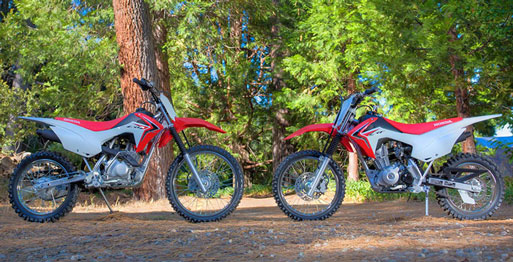
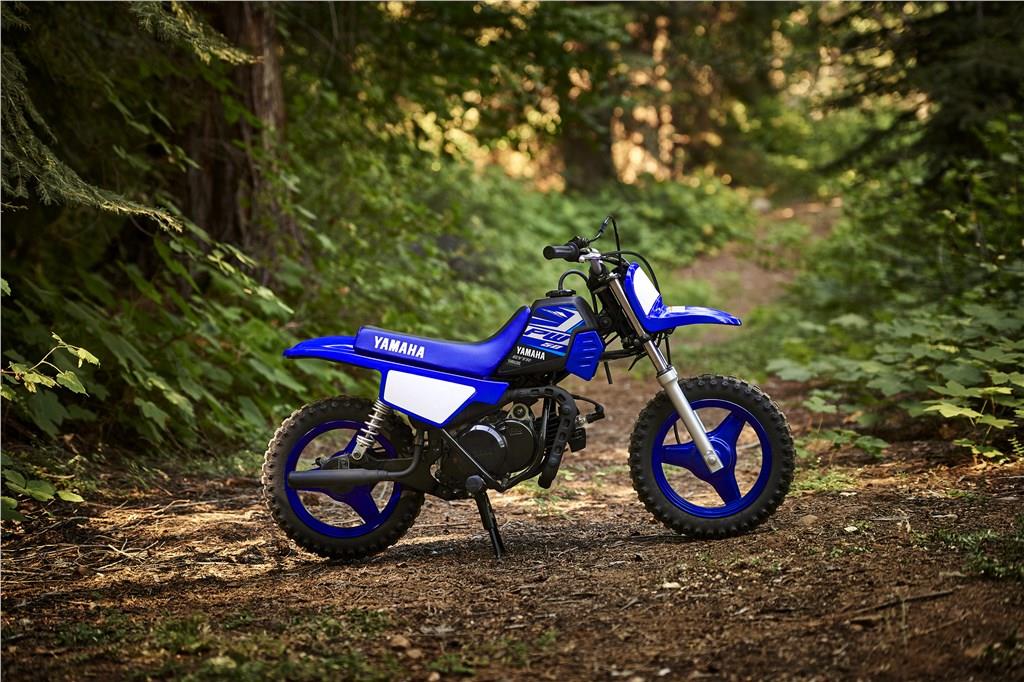
| First Bike | 3–7 | 3'0"–4'0" | 18"–22" | Honda CRF50F, Yamaha PW50, KTM 50 SX Mini |
| Youth Trail | 6–10 | 4'0"–4'6" | 22"–26" | Honda CRF110F, Kawasaki KLX110R, Yamaha TT-R110E |
| Youth Racing | 7–12 | 4'2"–5'0" | 24"–29" | Kawasaki KX65, KTM 65 SX, Yamaha YZ65 |
| Teen Trail | 10–14 | 4'8"–5'4" | 29"–33" | Honda CRF125F, Yamaha TT-R125LE, Kawasaki KLX140R |
| Teen Racing | 10–15 | 4'10"–5'6" | 32"–35" | Kawasaki KX85, KX112, Yamaha YZ85, KTM 85 SX |
| Adult Trail / Beginner | 15+ | 5'2"–5'10" | 33"–35" | Honda CRF250F, Yamaha TT-R230, Kawasaki KLX230R |
| Adult Race / Experienced | 15+ | 5'6"+ | 37"–39"+ | Honda CRF250R / CRF450R, Yamaha YZ250F / YZ450F, Kawasaki KX250 / KX450 |
The Beginner-Friendly Trail Bikes
For new riders — kids or adults — the right first bike is usually a fuel-injected, air-cooled, mild-power trail platform. These bikes are forgiving, easier to start, simpler to maintain, and almost always have lower seat heights than their race-spec siblings.
- Lower seat heights: often 2–6 inches shorter than the equivalent-displacement race bike.
- Softer power delivery: torquey, predictable engines that don't loft the front wheel under nervous throttle.
- Push-button start: most modern trail models are electric-start only or electric-plus-kick. No more dad-yanking-the-rope humiliation.
- Air-cooled simplicity: fewer hoses, no radiator to bend, easier first maintenance.
- Forgiving suspension: tuned for trail compliance, not race-spec stiffness.
Browse our full lineup at dirt bikes, or jump straight to brand-specific pages: Honda CRF50F, CRF110F, CRF125F, and the trail-spec CRF250F.
The Race-Spec Bikes: When You're Ready
Race bikes — the "R" and "SX" models — get the tall seats, the stiff suspension, and the snappy power. They're designed for riders with skill banked already, on courses with jumps and ruts. If you don't yet know whether you've outgrown a trail bike, you probably haven't.
- You're spending more time at full throttle on your current bike than partial throttle.
- You're consistently jumping doubles or running 30+ minute moto sessions without fatigue.
- You can stand on the pegs, weight the outside peg through corners, and shift body position naturally.
- The seat height on your current bike no longer requires effort to manage — you'd prefer more reach and travel.
Gear Up Before the First Ride
The right-sized bike only matters if the rider has the gear to stay protected. Helmet, goggles, gloves, boots, and chest/back protection are non-negotiable — and like the bike, they need to fit. Browse our full motorcycle gear selection or jump to specific categories below.
- Dirt bike helmets — DOT-certified, off-road specific shapes for goggle integration.
- Riding apparel — jerseys, pants, base layers, knee/elbow guards.
- Aftermarket parts — bar risers, lowered seats, suspension adjustments to fine-tune fit.
Shop Youth & Adult Dirt Bikes by Brand


Sit On Before You Buy
Specs and sizing charts get you 90% of the way there. The last 10% — the difference between a bike you'll grow into and one you'll outgrow in a year — comes from putting the rider on it. Our showroom has working examples of most current Honda, Yamaha, Kawasaki, Suzuki, and KTM models. Bring the kid, the inseam measurement, and questions. We've been doing this since 1980.
Safety Notice & Disclaimer
This article is provided for general informational purposes only and does not constitute professional safety, medical, or legal advice. Dirt bike riding involves inherent risk of serious injury or death. No riding gear can guarantee protection in every crash.
Always wear a properly fitted DOT-certified off-road helmet (Snell M2025 recommended for racing), goggles, motorcycle-specific gloves, knee/shin protection, motorcycle boots, and chest/back armor. Take an MSF DirtBike School course or equivalent before riding without supervision. Children under 16 should always ride under direct adult supervision and only on appropriately sized machines.
Chaparral Motorsports is not responsible for injury, damage, or loss arising from the use of products discussed in this article. When in doubt, consult a qualified gear specialist or your motorcycle dealer.
