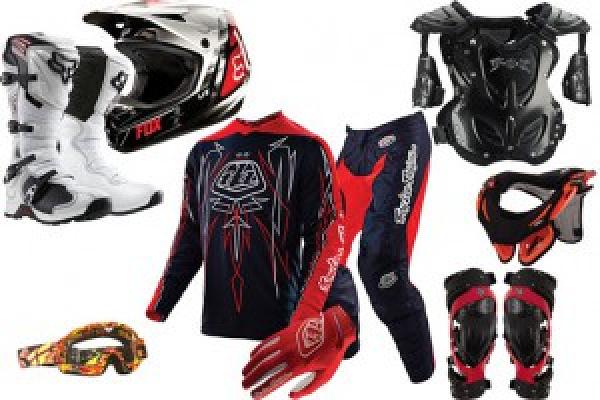
The fastest way to spoil a new dirt bike is to ride it without the right gear. Motocross terrain is unpredictable in a way street riding never is — rocks, roost, ruts, other riders' bikes — and the consequences of a get-off on a track or trail go well beyond road rash. Before you make the trip to the dirt hills with that new bike, do an equipment check. Here are the seven pieces of motocross gear every dirt-bike rider needs in the garage, what each one is for, and why none of them is optional.
1. Motocross Boots
After the helmet, MX boots are the single most important piece of dirt-bike gear you'll own.
The ankle and foot take more abuse on a dirt bike than any other joint — pegs slip, foot-out cornering puts the foot into the dirt at speed, and a bike falling over with a rider's foot under it is an injury that ends seasons. MX boots use rigid plastic shells, internal ankle braces, and steel shanks under the sole to spread crash load and prevent fold-back. Fit matters more than brand: a too-loose boot is almost as bad as no boot.
2. Motocross Helmet
Make sure it's DOT-certified, fits snug without pressure points, and is rated for off-road impact.
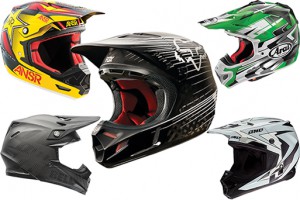
A dirt bike helmet is shaped differently from a street helmet. The extended chin bar gives extra breathing room (which matters once your activity level picks up), and the large eye-port is sized to fit goggles instead of a flip-down face shield. Look for DOT certification at minimum; Snell or ECE 22.06 ratings are stronger marks. MIPS (multi-directional impact protection) is now common at the mid- and upper-tier price points and is worth the upgrade.
3. Motocross Goggles
Dirt and roost go everywhere on a motocross bike. Eye protection is mandatory.
Buy goggles sized to your specific helmet — most MX helmet brands list compatible goggle brands and models. Fit should be snug all around with no pressure points on the bridge of the nose. Plenty of ventilation prevents fogging; anti-fog inserts (tear-off lens kits) are cheap and worth carrying. Don't skimp here — cheap goggles fog quickly and scratch in one session.
4. Elbow and Knee Guards
The joints take the impact when you stretch out a hand or knee to catch a fall. Guard them.
Elbow and knee guards spread crash load across a larger surface area and protect against debris and the bike landing on you. Some jerseys and pants have integrated padding, but for serious riders standalone pads from CE-rated brands offer significantly better protection. Knee braces (separate from soft pads) are the next step up — they prevent hyperextension and are recommended for any rider racing or jumping.
5. Chest Protector / Roost Guard
Protects the chest, shoulders, and back from roost (rocks and dirt thrown by other riders' tires) and impact in a crash.
Two styles to know: a soft roost guard (lighter, for everyday riding and trail) and a hard-shell chest protector with shoulder and back coverage (heavier, for racing or jump-heavy trail). Some riders prefer a full body armor suit that integrates chest, back, and shoulder protection in a single garment. Whatever you pick, make sure it fits under your jersey without bunching or restricting arm movement.
6. Jersey and Pants
Designed for the activity — not the same as street gear.
MX jerseys use moisture-wicking, abrasion-resistant fabrics with reinforced shoulders and elbows. Pants are heavier-built than the jersey, with leather inner-knee panels (boot/bike grip), reinforced butt and inner thigh, and articulated knee zones. Avoid riding MX in jeans or street pants — they offer almost no abrasion or impact protection and the fit will fight your knee braces.
7. Motocross Gloves
Roost in the hands hurts. Sweat-slick hands lose grip. MX gloves solve both.
Off-road gloves protect the hands from flying debris and provide grip in heat and humidity. Look for breathable construction with reinforced palm material, silicone fingertips for lever feel, and a low-profile cuff that fits under jersey sleeves. Some riders prefer a knuckle-armored option for trail and woods riding where branches and rocks are more of a hazard than on a groomed track.
Shop Motocross Gear
Chaparral Motorsports stocks motocross helmets, boots, goggles, jerseys, pants, gloves, knee/elbow protection, and chest protectors from Fox Racing, Thor, Alpinestars, Bell, Leatt, EVS, and more. Browse our motocross gear or call our parts counter at 1-800-841-2960 to get sized.
Safety Notice & Disclaimer
This article is provided for general informational purposes only and is not a substitute for the manufacturer's fitting instructions, sizing charts, and safety warnings for any specific piece of motocross gear. Helmet certifications (DOT, Snell, ECE), pad certifications (CE), and product designs are updated periodically — always reference the current manufacturer documentation for the products you purchase.
No motocross gear eliminates the risk of injury or death in a motorcycle crash. Proper fit is critical; gear that is loose, worn, or improperly sized may not provide its rated protection. Replace any helmet that has been involved in a crash, and inspect all gear for damage before each ride. Chaparral Motorsports is not responsible for injury, damage, or loss arising from the use of products discussed in this article.
