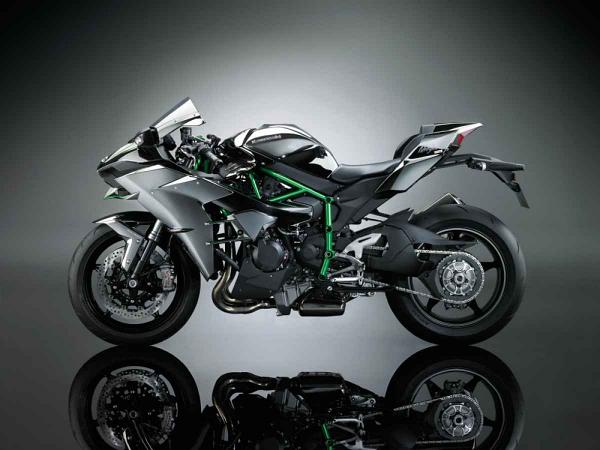
The Kawasaki Ninja H2 platform is one of the most distinctive motorcycles in modern production — a supercharged, street-legal hyperbike based on closed-course race technology from Kawasaki Heavy Industries' aerospace and turbine divisions. The H2 lineup splits into two paths: the street-legal H2 and H2 SX, and the track-only H2R. This guide breaks down how the bikes differ, what each is built for, and where the H2 platform fits in the modern high-performance market.
The H2 Platform: Two Versions, One Engine
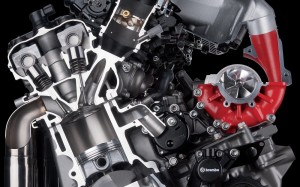
The Ninja H2 was developed using technology from across Kawasaki Heavy Industries — the engine's supercharger is built by KHI's aerospace division, and the chassis benefits from input from the gas turbine group. The result is a 998cc inline-four with forced induction. The lineup is intentionally split between street and track.
Ninja H2 / H2 SX (Street-Legal)
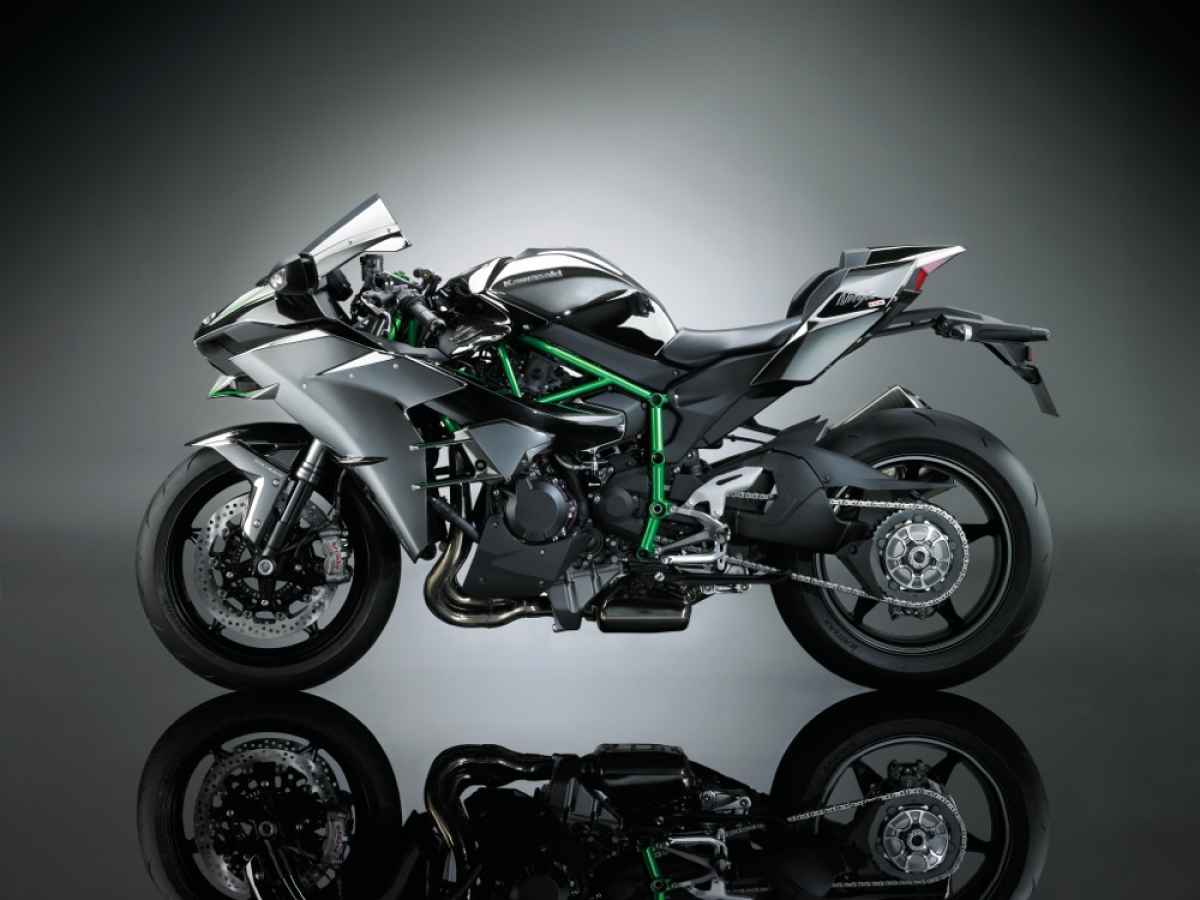
- DOT compliance: headlight, taillight, mirrors, and turn signals included; emissions-compliant catalyzed exhaust.
- Street-tuned power: supercharged 998cc inline-four with broader, more usable power band than the H2R.
- Full electronics suite: IMU-based traction control, launch control, quick-shifter, cornering ABS.
- H2 SX variant: sport-touring chassis with saddlebag mounts, more upright ergonomics, and softer power delivery for daily highway use.
Ninja H2R (Track-Only)
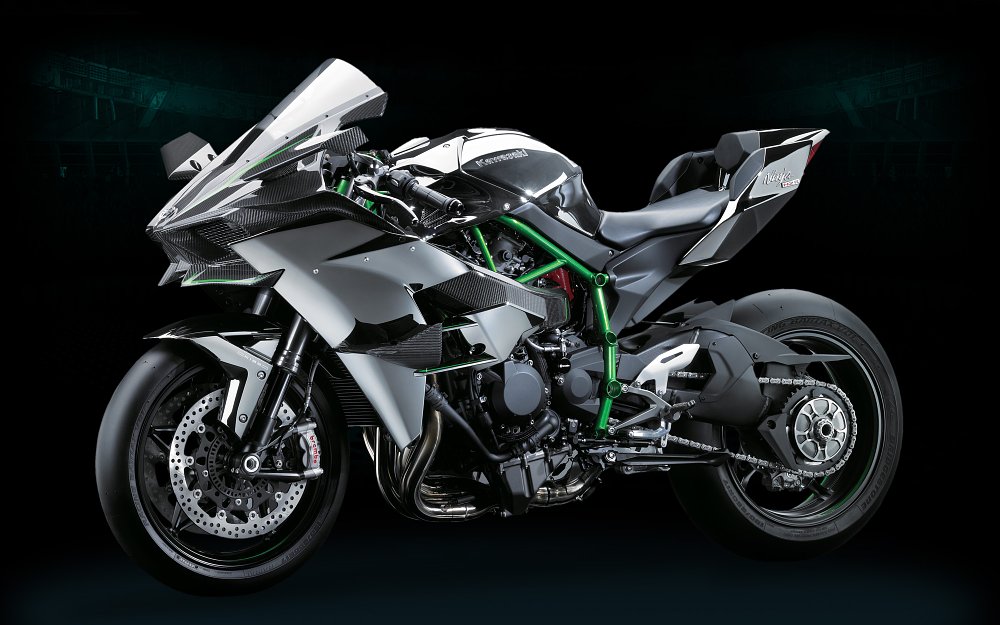
- Closed-course use only: not street-legal anywhere in the world. No headlight, mirrors, or turn signals. Sold without a road-use title.
- Race-tuned power: uprated supercharger, higher boost, race exhaust. Significantly more peak power than the street H2.
- Aerodynamic bodywork: carbon-fiber winglets generate downforce at high speed.
- Track-spec electronics: race-tuned IMU and traction control; some markets ship without ABS.
Head-to-Head Comparison
The H2 and H2R share a frame and supercharger architecture but diverge sharply in tuning, electronics, and bodywork. Here's how the specs compare.
| Ninja H2 (Street) | Ninja H2R (Track-Only) | |
|---|---|---|
| Legality | Street-legal in all 50 states | Closed-course only |
| Engine | 998cc supercharged inline-four (street-tuned) | 998cc supercharged inline-four (race-tuned) |
| Lighting & DOT | Headlight, taillight, mirrors, turn signals included | None |
| Bodywork | Standard fairings, mirror and plate mounts | Aero winglets, race fairing |
| Exhaust | EPA-compliant catalyzed muffler | Open race exhaust, no catalyst |
| Electronics | Full IMU, traction control, launch control, KQS, cornering ABS | Race-spec electronics; no ABS in some markets |
| Buyer Profile | Sport-touring enthusiasts, canyon riders, collectors | Track-day riders with dedicated transport; collectors |
Which Should You Buy?
The H2 platform isn't a casual purchase — it's a low-volume, high-performance machine with a specific use case for each variant.
- Street rider with track-day interest: the standard Ninja H2. Use it on the road, take it to a track day occasionally. The street-tuned engine still produces serious power.
- Sport-touring, two-up, longer rides: the Ninja H2 SX. Same supercharged platform with a comfort-tuned chassis, saddlebag mounts, and softer power delivery.
- Dedicated track-day rider: the Ninja H2R. Closed-course only — you'll need a trailer, transport vehicle, and a home track. The fastest production motorcycle Kawasaki makes.
- Beginner or intermediate rider: none of the H2 platform. The platform is not a starter bike. Look at the Ninja 400, Ninja 650, or Ninja ZX-6R first, build experience for a season or two, then revisit.
Authorized Kawasaki Dealer


See an H2 in Person
The Ninja H2 platform is best understood in person — the build quality, the supercharger inlet, the chassis welds. We're an authorized Kawasaki dealer and keep H2-platform inventory when available. Visit our San Bernardino dealership or browse Kawasaki OEM and aftermarket parts online.
Safety Notice & Disclaimer
This article is provided for general informational purposes only. The Ninja H2R is a closed-course race motorcycle and is not legal for use on public roads in the United States or most other jurisdictions. Operating an H2R on public roads is unlawful and unsafe.
Always wear a DOT-certified helmet (additional Snell M2025 or ECE 22.06 certification recommended for high-performance riding), CE-certified protective apparel, motorcycle-specific gloves, and motorcycle boots. Take certified rider training before riding any liter-class or higher motorcycle.
Chaparral Motorsports is not responsible for injury, damage, or loss arising from the use of products discussed in this article.
