
A motorcycle jacket that doesn't fit isn't protective gear — it's a hi-viz costume. Armor that floats over the joint it's meant to protect will not be in place at the moment of impact. A jacket that's too tight restricts movement and rides up at speed. The right fit makes the difference between gear that works and gear that just looks the part. This guide walks through how to measure for a motorcycle jacket, what to check during try-on, and how to verify armor placement before you buy.
Why Jacket Fit Matters More Than Brand
A $1,200 race jacket with the wrong fit protects worse than a $300 jacket that fits correctly. Here's why fit dominates the safety equation.
- Armor stays positioned over joints: shoulder armor over the AC joint, elbow armor over the olecranon, back protector covering T1 through L5. A loose jacket lets armor slide during the milliseconds of an impact when you need it most.
- The jacket doesn't ride up: at 70 mph in a riding position, a poorly fitted jacket can ride up six inches, exposing the lower back and abdomen. The waist of the jacket should sit at or just below your natural waist when you're in a riding tuck.
- You can actually use the controls: sleeves that bind at the elbow make you reluctant to look over your shoulder or reach for switches. Mobility is part of safety.
- Ventilation works: a jacket that's too tight collapses against your body and blocks airflow through intake vents. A jacket that's too loose flaps and exhausts air at the cuffs instead of through designed exhaust paths.
How to Measure for a Motorcycle Jacket
Five measurements get you 90% of the way to the right size. Take them with a soft tape measure, in lightweight clothing or a t-shirt — not in winter layers.
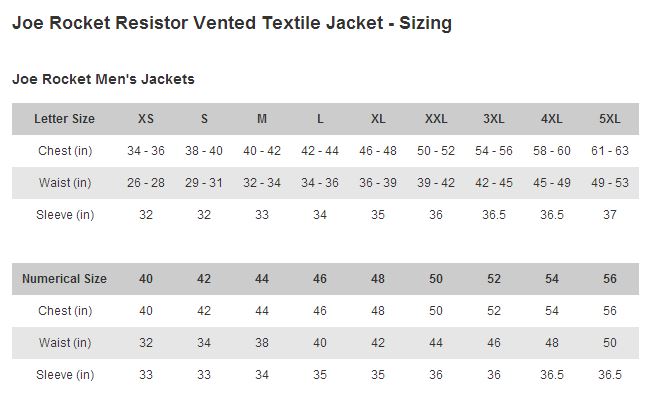
- Chest: wrap the tape around the fullest part of your chest, under the arms, parallel to the floor. Breathe normally — don't expand or contract. This is the measurement most jacket sizing charts care about most.
- Waist: measure around your natural waist (typically just above the navel), not where your pants sit. Keep the tape level.
- Sleeve length: with your arm slightly bent (as it would be on the bars), measure from the center back of your neck, across the top of your shoulder, down to the wrist bone. This single measurement matters more than any other for sport-cut and race jackets.
- Torso length: from the top of your shoulder to where the bottom hem of the jacket should sit. Touring jackets sit at hip; sport jackets sit higher and curve up at the front for a riding tuck.
- Shoulder width: across the back, from the outer point of one shoulder seam to the other. Most riders skip this one — but it's the measurement that determines whether shoulder armor sits over the joint or behind it.
The Try-On Test
Measurements get you close. The try-on confirms the fit. Walk through this checklist before you buy — at the store, or as the very first thing after an online order arrives.
- Zipper closes fully without straining at the chest or waist.
- Shoulder armor sits over the AC joint (the bump on top of your shoulder), not behind it on your shoulder blade.
- Elbow armor sits on the elbow when your arm is straight, and stays put when you bend the arm 90°.
- Sleeve cuffs reach the wrist bone when arms are extended forward in riding position — not at the forearm or hanging over the hand.
- Back protector pocket sits flat against your spine, covering at least T1 (top of shoulder blades) through L5 (lower back).
- Lean forward into a riding position (arms extended, slight forward tuck). The jacket should not pull up at the back — if it exposes more than an inch of skin or base layer, it's too short or the sleeves are too long.
- Elbow armor stays in place when you grip imaginary bars.
- No binding at the shoulders when you reach forward. A small amount of bunching at the inner elbow is normal; binding across the back is not.
- Connection zipper aligns with pant top if you'll be using one. Most touring and ADV jackets have a 360° zipper at the bottom that connects to matching pants.
Armor: What to Check Beyond Fit
A correctly fitted jacket doesn't help if the armor inside isn't rated for what you ride. Here's what to verify.
| Armor Zone | Standard Rating | What to Look For |
|---|---|---|
| Shoulders | CE EN 1621-1 Level 1 or Level 2 | Level 2 absorbs more impact energy. Most jackets ship with Level 1; Level 2 is often an upgrade. |
| Elbows | CE EN 1621-1 Level 1 or Level 2 | Same standard as shoulders. Confirm armor is in the pocket — some budget jackets ship with empty pockets. |
| Back | CE EN 1621-2 Level 1 or Level 2 | Note the "-2" — different standard than shoulders/elbows. Many jackets ship with only a foam back pad. A proper CE Level 1 or 2 protector is often a separate purchase. |
| Chest | CE EN 1621-3 (newer standard) | Often optional, especially on street jackets. Worth adding for high-speed riding and track use. |
| Whole Garment | CE EN 17092 (AAA / AA / A / B) | A newer standard for the jacket as a complete system. AAA is the highest (race-grade); AA is most street/touring jackets; A is light/casual. |
Jacket Styles by Riding Type
The best-fitting jacket in the wrong category is still the wrong jacket. Match style to what you ride.
- Sport / Race Leather: pre-curved arms, short hourglass torso, perforated panels for ventilation, removable inner liner. Fits tight when standing — fits perfectly in a riding tuck. Designed for sustained high speeds and worst-case slide protection. Examples: Alpinestars GP Plus R, Alpinestars Missile, Icon Hypersport.
- Sport-Touring Textile: longer cut than sport, includes waterproof and thermal liners, more pockets, often a back-vent system. The most versatile category for riders who do a mix of commuting, day trips, and the occasional canyon run. Examples: Alpinestars Andes V4 Drystar, Klim Latitude, Noru sport-touring lineup.
- Adventure / ADV: touring construction with additional venting for dirt riding in hot weather, modular layered liners, sometimes a removable hood for off-bike use, often with extensive cargo capacity. Examples: Klim Badlands Pro, Klim Carlsbad, Alpinestars Halo Drystar.
- Cruiser / Heritage: leather styling — classic café racer, motocross-throwback, or full traditional cruiser. Lower armor protection levels in many heritage jackets; some have armor pockets but ship empty. Confirm CE rating before assuming the jacket is protective. Examples: Icon 1000 Hood, Roland Sands Ronin, Alpinestars Charlie.
- Mesh / Hot Weather: designed for triple-digit ambient temps where airflow is the priority. Reduced abrasion resistance compared to full textile or leather. Best for slow urban riding rather than sustained highway speeds. Examples: Icon Mesh AF, Alpinestars T-Faster Air, Noru mesh lineup.
- Commuter / Urban: jackets that look like everyday wear off the bike but include CE armor and motorcycle-specific construction. Lower protection levels than purpose-built riding gear — appropriate for short commutes at street speeds. Examples: Icon Hella, Spidi Originals, Knox Urban.
Shop Motorcycle Jackets by Brand


Try Before You Buy — We Stock Most Sizes
Online sizing charts get you 90% of the way to the right jacket. The last 10% — the difference between a jacket that fits and one that almost fits — comes from trying it on. We stock the most popular sizes in every major brand at our San Bernardino, CA dealership, and our gear specialists can pull three or four candidates based on your measurements and what you ride. Browse our full motorcycle gear selection or stop by to fit in person.
Safety Notice & Disclaimer
This article is provided for general informational purposes only and does not constitute professional safety advice. No motorcycle jacket — regardless of construction, armor, or fit — can guarantee protection in every crash or impact.
The protective performance of any jacket depends on proper fit, correct armor placement, the nature of the incident, and the gear's condition at the time of impact. Always verify CE certifications (EN 1621-1 for shoulders/elbows, EN 1621-2 for back, EN 17092 for the whole garment) and confirm which armor components are included with the jacket versus sold separately. Replace any jacket that has been involved in a crash, even if no damage is visible.
Chaparral Motorsports is not responsible for injury, damage, or loss arising from the use of products discussed in this article. When in doubt, consult a qualified gear specialist or your motorcycle dealer.
